
Podcast· 1 h 32 min
Why INTERGEO still wins in the AI era – Olaf Freier on trade show ROI
Watching here? Subscribe on YouTube.Get the next 2D Is Against My Religion episode in your YouTube feed.
SubscribeListen to the audio
Summary
Olaf Freier went from satellite surveying engineer and INTERGEO exhibitor to the team that organises the show. He traces its big shifts – GPS, GIS, drones and now AI with reality capture – explains where exhibitors lose their return on a booth, why face-to-face trust matters more as AI makes screens harder to trust, and what is new in Munich.
Key ideas
- 1According to Olaf, each wave arrived faster: GPS took about ten years to reshape the industry, GIS about five, and AI with reality capture now hits year on year – absent in Stuttgart 2024, it smashed the floor in Frankfurt a year later.
- 2In Olaf’s view, being there is not enough: exhibitors need a clear goal – brand or product awareness, thought leadership, leads or network – and to tell the organiser beforehand.
- 3He says the same budget buys a different result: a corner stand open on two aisles beats a one-sided row booth, and an empty exhibitor-directory profile means you can’t be found.
- 4According to Olaf, 25–30% of INTERGEO visitors are first-timers who aren’t in any exhibitor’s database, and visitors book at least 16–20 meetings over two days.
- 5As AI makes it hard to trust what you see on a screen, Olaf argues face-to-face meetings – and comparing brands, support and workflows side by side – are worth more, not less.
Quotes
“Face to face becomes more and more a very trusty currency nowadays.”
“Nowadays you are not sure and you cannot trust that what you see on your screen because of the AI technology.”
“The invest is the same but the output is completely different.”
Quoted in tech guides
Questions answered
- Is exhibiting at a trade show like INTERGEO still worth it when buyers can research everything online?
- According to Olaf Freier, yes: 25–30% of INTERGEO visitors are first-timers who are not in any exhibitor’s database, and talking to them about their pain points doubles as market research for product development.
- Why do some exhibitors get no ROI from a trade show booth?
- In Olaf Freier’s experience, when an exhibitor misses its targets, there was usually no conversation with the organiser beforehand about its goals, so INTERGEO could not tailor visibility or campaigns to help.
- Is a corner booth better than a row booth at a trade show?
- Olaf Freier says a one-sided row booth leaves only about three metres of aisle as a touch point, while a corner stand open on two aisles gives two – the investment is the same but the output is completely different.
- Can exhibitors scan with SLAM or laser scanners at INTERGEO?
- According to Olaf Freier, scanning inside the Frankfurt venue was not allowed under changed rules on critical infrastructure; in Munich scanning inside is possible, but exhibitors should talk to INTERGEO first, especially for scanning outside.
- What is the reality capture experience park at INTERGEO in Munich?
- Olaf Freier describes a new area where visitors can take reality capture devices, walk through and scan objects themselves, and compare brands – next to a reality capture hub with the 3DISE podcast studio and four to five companies.
Chapters
Transcript
Full transcriptabout 66 min readShowHide
Transcribed automatically (ElevenLabs Scribe) and lightly edited. It may contain small errors in words or speaker names. Click a time to play the audio from there.
Michal Gula: 2D is against my religion. So Olaf, as I, as I was saying, the serious discussion will start in, in, like, two minutes, but, you showed me your, your, big cup of, of the water. So is this-
Olaf Freier: Yeah
Michal Gula: something you have been s- doing lately or for a longer time? The, the drinking.
Olaf Freier: No, I, I started doing it... This, I, I do it not for such a long time, you know, so it's, it's,... But having this cup, since I have it, it's forced me to drink water, you know. So, and, and I will not tell you if it's water or not, so, but it's, it's, it's looks like water, so you, you can have some, some kind of a idea what it can be.
Michal Gula: I, I, I to-
Olaf Freier: Sometimes not
Michal Gula: I totally understand that, that several guests, or some guests can be, nervous, so I'm not judging, whatever you have in it, the cup.
Olaf Freier: And, and, and, and depends on the, on the day, you know, so it's... And, and the topics you have to handle sometimes, maybe water is not enough. You know. No, joking. No, it's, it's, very good.
Michal Gula: No, but, you got me interested because, because just, just, like two weeks ago, I started to, like, control the drinking of, of water, on myself as well, and I just learned that it's not that easy to drink three liters a day. you really have to do it on purpose.
Olaf Freier: Yeah.
Michal Gula: And also, I'm spending a lot, much time on the toilet that I was used to.
Olaf Freier: Yeah, yeah, yeah. Yeah. You, you, you have to accept that a lot of things change in your body.
Michal Gula: Yeah.
Olaf Freier: And your body react differently than before, but, but after a time it comes to a new normal, and it-
Michal Gula: Yeah
Olaf Freier: you can cope it, but it's good. And, with a cup, you know, you, you feel forced to, to drink more water, and it's, it's good.
Michal Gula: Uh-huh.
Olaf Freier: You feel it after a while that it's good.
Michal Gula: so I should be waiting a bit longer, yeah, for the effects?
Olaf Freier: Of course. So first of all, you stop running to the toilet every, every hour, so this is the first change. And then, then, yeah, you, you feel it, you know. So it's, it's really kind of, of, feeling the energy in- inside, you know, so it's with, with, with more water you feel better.
Michal Gula: I'll keep, I'll keep drinking then. The water I mean.
Olaf Freier: Yeah.
Michal Gula: Olaf Freier is my guest for today. Welcome, Olaf.
Olaf Freier: Welcome, Michael.
Michal Gula: You are-
Olaf Freier: Thank you very much for, for having you here today.
Michal Gula: Perfect. you are the, the man behind the team of, organizer of the INTERGEO, in Germany. It's one of the biggest events I, I know in, in our industry, and we have known each other for few years now, and if I understand right, your beginnings were not, as an organizer. You were exact opposite of it. You were the one standing in the booths, right? And, and, just thinking about how stupid the organizer are because they are doing this and they are doing, something wrong. How does it feel, on the both sides? Like, what do you think you didn't know when you were in the booth and you know now?
Olaf Freier: Yeah, so it's, it's a very interesting question. As you said, I, I started completely different, you know. I started as a surveying engineer, was, was specialized in, in satellite sur- surveying, and, I worked in this kind of field for, for five years and, because of my first job, I, I got it just quite, right after the, the, the studying. you know, we, we, my, my former com- or my first company I was working for, was, was, writing a software on, on calculating satellite data for accurate positions and, the software was, was excellent and, and, and great. So my, my first boss told me or say, "Okay, this seems to be that it's a good product. We, we have to, to sell it and, and, and take care about how to sell it and, and where we can do this." And, you know, I'd say, "Okay. I'm sur- s- surveying engineer and, and not a marketer, but, but of course I will do my best to, to reach out, where we can go to, to sell your product, you know." And this was the reason when I went reach out and, and did the reach, research and, I ended up at, at, in, at the, the Deutscher Geodätentag at that time, was organized, and, and owned by DVW as INTERGEO, also nowadays is, is owned and, also from the conference side is organized.
Michal Gula: Did it, so was the name-
Olaf Freier: So I said, "Okay, I found it."
Michal Gula: That was the name of the, of the conference?
Olaf Freier: The, the former, yeah, the f- the, the name of, before it start turning into INTERGEO in 1995, it was, it was Deutscher Geodätentag. It was a-
Michal Gula: Okay
Olaf Freier: traditional annual meeting of the DVW, and it was more focused on the, on the core theme, of, of that what we have nowadays. So, and, and I said, "Okay, I f- I find, find a, find a, an event. Let's go there." And, and he asked, he said, "Okay, yeah, let's, let's organize it." And then it was first, first, event we, we went was in, in 1992, and, it was Augsburg, and we went there and, and we exhibit and, you know, it was... I was a rookie. I was happy to have a, have a booth, and, and a space and, and not forget anything what we would like to present. But it was, and, and I, I was astonished what, what was happening around me, you know, all with the other booths and I think, wow, what, what kind of-
Michal Gula: How, how many-
Olaf Freier: room for improvement I have
Michal Gula: how many visitors were there back then if, if you can just briefly remember?
Olaf Freier: Oh, at that, at that time it was, I don't know, 3,000, something like this. There was not that much.
Michal Gula: Okay, so it was much smaller than, than it's, than it's now.
Olaf Freier: Yeah, yeah, yeah. It was smaller. It, it was not-
Michal Gula: But, but still overwhelming for, for a young guy, right?
Olaf Freier: Yeah. When you're, when you're never be involved in such an organization to, to present, your, your company to sell something, you know, it's, it was really a complete different view from my, my, my, my, at, at that time. However, w- we, we overcome it and of course a lot of things went well, other things didn't well, w- went well. So, and, and with the learning curve, we started again coming back to the Deutsche Geodätentag in, in 1993. So, and, and from then onwards we were exhibiting at, at that event and, yeah, we were able to, to sell our product, and it, it was, yeah, was, was great, you know? And, after five years, I, I got an offer to, to change sides, here from, from my f- at that time boss, so that's the father of, of Christoph Winter.
Michal Gula: Mm.
Olaf Freier: And, he asked me if I can imagine or can think about, yeah, working for him and-
Michal Gula: Can you-
Olaf Freier: and organizing the show.
Michal Gula: Can you remember, can you remember something you were, like, as I mentioned in my question before, something that you thought was really stupid from the organizers? Like, you would change it right away before you even, even know or, or had an idea that you could, one day you could be on the other side. Was there something like that?
Olaf Freier: Yeah. It's, it's the way how, how the layout was, was planned at that time, you know? So when, when we, when we look at the time, it was before 1995, and we had a, this smaller location where the, this event took place. Of course, there were limited opportunities to present, you know? And, and I can remember that, in, in, in Mainz, there was, was an event in 1995, and there was a booth directly opposite or in front of an elevator, and the elevator was n- needed that the, the setup and the dismantling can happen for the, for a lot of exhibitors. So, and before the booth was not, pulled down, there was no one else able to, to, yeah, to dismantle. So there were some, some glitches, which of course you say, "Okay, how can this be?" And, so it was only, only small thing because I was, was so overwhelmed with the stuff I had to organize myself. And, especially we, we, you know, when we ha- have to, to present the, the, the software, there was a need to, showcase how it works. So, and, and to do so, it was needed that we have a GPS antenna outside somewhere to collecting data to bring it into the booth to show the audience how we are able to calculate accurate, accura- accurate, positions. So, and, and that was m- part of my job to find a way to bring out the a- antenna and bring in the cable into my booth to showcase how the software is running, you know? So this was always fun, you know, and-
Michal Gula: Did, did you manage to do it? Did you manage to do this?
Olaf Freier: Yeah. In the beginning, I was not so clever, you know? So, but over the time, there was a routine to, to proceed. And, it's, it's also was a learning, of course, to, to start very early doing this, not only six weeks before the show, you know? So this was something, which was, was of an interest, and there I saw, okay, it's, it's good to get the right support from organizers, to get the right presentation in. And, yeah, so, but when you're, when you start being a, a, a surveying engineer, you never think about those things, you know? It's like, okay, okay, what, what they are doing. And of course I, I visit other shows before, but completely with a different point of view, you know? And, yeah, this was good learning.
Michal Gula: So when you, when you were asked whether you would join the, the INTERGEO, organizing team, what was the feeling at that time? Like, be- because so until then you were the guy in the booth, enjoying different expos all around, Europe or, or the world. So, take me to your, your mind. Like, what, what were you thinking when you were offered this, this job? Were you like, "Right away I wanna do this," or were you just thinking and thinking about this?
Olaf Freier: Yeah, so it's, it's really like this, that I, that I was thinking about, of course, it's a good opportunity, to, to do something. Because while I was, was studying in, in, in Hamburg, I was sitting in the university and, and, and, and was asking myself, what the hell I'm doing here and learning this stuff which is very important for the, for society and for a lot of, lot of things which going on our, on our globe, but nobody ta- knows this about, you know? And, and, and we not get the right awareness on, on doing this. And I said, "It would be good, that I'm some days at a place where I can do something which bring this bit more on a, on a, on a, on highlight this topic and bring it more, and raise it more so that, that the awareness, of, of this, geospatial and geodesy and so on, is, is, is more out and will be more visible." So at, at that time when I got, got the offer, I, I thought, "Okay, someone was listening to me when I was sitting in the, in the, in the bench, on a bench in the, in the university." And yeah, I, I took the opportunity because it was not the way on understanding the industry because I, I knew the industry very well. but it was more to learn how to organize, an event and this, when it comes to the point saying, okay, mm- And to accept that I was not, knowing very much about how this can be and how it should work, you know? And the-- I- I received a lot of support, in, at HINTE at that time, but, yeah, I would like to say it paid off at the end.
Michal Gula: it, it, it's great to see your journey and, this would be my question, like, because when you were working for the company, you were selling these devices, you had to, like, specialize in what you understand, what you are studying, in the technology and, and, like, to go very deep i- into your field because, of course, you would need to speak to your potential clients during these expos and, and everything else. But once you move to the organizing side, you cannot specialize anymore, right? You, like, yeah, like, need to know a bit about everything, basically.
Olaf Freier: Yeah.
Michal Gula: But you don't have time to go very deep. Like, how, how do you handle this?
Olaf Freier: Yeah, so it's, it's of course a different kind of, of how you, how you'll be active in the industry. You know, you-- as you said, you know, before I was m- very focused on, on satellite surveying and, generating 3D-- for 3D models, cl- point, point clouds for, for-- I, I was measuring in Hamburg, the, and, and, and also for Deutsche Bahn, and so on and so forth. So, but, but then it comes to the organizer and it, of course, you need the helicopter view. You know, you, you have to get an understanding on what's going on in the different segments, what are the latest trends. And of course, it was also a kind of a learning curve for me because there was a lot of-- so for five years where I was focusing on, on one topic, I would not say I forgot everything what was n- next to this topic, but of course it was, you have to step back to, to catch up to see what is the latest trend, what are, what are, what are the, the, the current, state-of-the-art products, so that you get the understanding what's needs to be at your show floor to be relevant and, and to create the right benefit for the audience, so for the exhibitor, but also for, for the visitors. And, and this was, of course, in the beginning a, a kind of a learning for me, stepping up and, and getting a different view on the entire, industry and, and, to, to understand in different segment what's going on and, and what are-- what is state-of-the-art.
Michal Gula: if you can think back, it, it's more than 30 years, now, right?
Olaf Freier: Yeah.
Michal Gula: Since, since the INTERGEO is-
Olaf Freier: Th- thirty-four years.
Michal Gula: Thirty-four years. And for you, it's also 34 years or, or is it more? in INTERGEO, I mean.
Olaf Freier: No, it's, it's not. It's, it's 24 years. So I was, from 25 until 24-- fif- 2015 to '24, I was, with a diff-- with other, company, which was also organizing shows, was second-largest, trade show organizer worldwide. And, so I was 10 years not with INTERGEO.
Michal Gula: what were the, like, like, the most important shifts you, you could experience during these years? Because it's, it's quite a long time and, and we can see this in the last few years, maybe a decade, that, the development and, and, like, the whole industry is moving so fast that it's very difficult to keep on, right, to, to keep updated, to keep being updated. And, and so I, I'm interested to see, like, what important shifts have you seen, in the INTERGEO Expo?
Olaf Freier: Yeah. I would like to point out three important shifts, over that time. first of all, it was, was, the, the time when, when the GPS surveying, opportunity, joined the, the industry and, and came in as a new trend. And it-- I was, I was at that kind and at that time, exactly, in, in front of that curve which coming as a trend into the industry, and because I, I was, was, deep during my, my study at the end to, to my master. And, this changed a lot in, in the way how you su- su- survey and, and how you, position, o- objects, but also how, how you create, the, the accuracy of, of points for long distance. You know, it was-
Michal Gula: So- sorry, sorry. So just, just to be clear, you are speaking about the shift from going analog to, to, to digital capturing of the data?
Olaf Freier: Yeah, but also the way what-- how, how GPS surveying was, was enabling the industry, you know, for long-- for measuring long distances. It was not easy, before to, to measure long distance and, and with a high accuracy, which changed immediately when, when the satell- satellite navigation system, come into place and we were able to, to measure long distance with a, with a GPS system. And, so this was a, was a shift which gave us a push in, in the surveying industry on, yeah, getting, getting new distances and, and areas, measured. And this is-- this was a, a, a change. Okay. A lot of people at that time thought, "Okay, it's the one and only, and the o- the other technology we'll not use anymore." But, you know, you will find, the limit in, in the GPS surveying at that time when you, when you run into a tunnel, then immediately you will have no satellite signal, and no satellite signal means no position on the ground. So, it was again, saying at the end, it was a very good t- tool and technology which was an add-on to the existing one and, and, gave new, opportunities on, on, on, on surveying. And this was, of course, a push at that time, um- for, for the industry, and that was the, the, oh yeah, belongs over 10 years, something like this. And then at that time, but after that it was totally integrated in, in, in, in, in technol- as a technology and, and systems workflows. And, so nobody was more interested after 10 years only to see, okay, is the position right or not? But everything else was not, not discussed anymore. But this was the time when the, when the geo information system come int- into place because of the opportunity and the development of, of the IT system itself and the IT technology than it was around the, the, the, 2000 when this, systems run into place. And, and this was the next boost and the next shift for the industry when we're able to add this topic, to the INTERGEO at that time, which was of course a logical development after surveying the position and, and having different kind of opportunities to, to survey, and then giving these, these geo data, additional qualifiers, you know? And, and this was when, when the geo's, information system come into place and open up also a new area. And this was, was of course a game changer for a lot of, lot of, data, how to use it and what kind of, of business cases and use cases you can do with this. And, and this is still nowadays, but, but at the moment, you know, when, when you say, okay, for me the, the third and the most one-- also one of the important shifts are the AI at the moment and in the combination with reality capturing. You know, when I, when I look back and I, and I joined Inter again in '24, and I was in Stuttgart, there was no AI. More or less there was no AI. So, and, and the year after in Frankfurt, it smashed the show floor, the AI topic, especially also in, in combination with the, with the reality capturing topic. So, and, and when you compare the, the first push by GPS was more or less over 10 years, so the geo information system took only five years, and at the moment we are more, more or less year on year when, when something hit the industry and, and push it. And these are, of course, from my point of view, game changers for the industry itself.
Michal Gula: Mm. My first INTERGEO was I think in, in 2017 or '18 or so. It was in Stuttgart. I'm, I'm, I'm not sure which, which year it was.
Olaf Freier: Yep.
Michal Gula: but my experience when I came back was everything is about drones. Like, I had that feeling-
Olaf Freier: Yeah
Michal Gula: from INTERGEO that there were drones everywhere.
Olaf Freier: Yeah.
Michal Gula: And so only for myself right now, when I can see, like last year, for example, at INTERGEO, it was-- I had the feeling that it was only about SLAMs, like SLAMs everywhere, right? So this is, this is the shift for, for myself, for example, to see like how we are, we are moving from one technology to another. And of course, as you mentioned, the AI, like everybody's trying to put AI basically anywhere just, just to go with the hype, right?
Olaf Freier: Yeah. Yeah. It's, it's very interesting to see, and of course you are right. So also the drones, was, was, was kind of a, of a remarkable point in, in, in ch- giving changes to the industry. You know, you were able to, to, measure areas or buildings or anything else in a, in a complete different way, and it, it was not that static anymore, or you need not that effort by going by plane or even have flights to, to, get, get maps or pictures in place. So this was a very, also a kind of a pushing, pushing boundaries for sure. but it's, you know, when you, when you look back and you mention it as well, it's, it's-- the, the timeframe is getting closer and closer. The trend jump in and it's happened, you know? It's, it's not lasting five or 10 years. It's, it's there maybe one year and then it smashes the floor and, and this is-
Michal Gula: Mm
Olaf Freier: the thing what you also can see, at, at INTERGEO. I, I'm pretty sure this year when, when you look at AI, what, what is possible, and it's not only in a, in a, in a-- really in a, in a software or, how to in a, in any application, it's also in the technology. So it's, it's really unbelievable how it's scalable and, and how it make an impact on, on a lot of existing products, and technology. So, there were-- because we ask it's, it's this three or four when you count in also the drones, which I will say over the 34 years, which, yeah, drives the, the, the development and, and, the trends at INTERGEO.
Michal Gula: Mm. Mm. I would like to speak about, the exhibitors and exhibition booths and then-
Olaf Freier: Yes
Michal Gula: and overall experience of, of exhibitors, on a big expo. Okay, we are speaking about INTERGEO, but since you have so many experiences with, with also different, trade shows, as an exhibitor or later as, as an organizer, I'm interested, in like where do you see the, the biggest mistakes of exhibitors or of like exhibitors to be? Like what do they get wrong about exhibiting on, on a expo or what, wrong expectations do they have?
Olaf Freier: First of all, I would like to say when, when they are at any, any show, there was some kind of a process to understand, okay, there are opportunities out, there are business opportunities out, there's a potential to get more business in or, or to extend the network. So in general speaking, this is, this is a posit- on a very positive side. W- Any, any company who showed up at any event is on, first of all on, on the right way forward. But then it starts to think then it's, it's, it's difficult sometimes to see how they look at it. You know? It's not done on, on renting a, a space and building a booth and, and thinking about what kind of giveaways they, they can give to the audience or what kind of a product they can present. So it's, it's something also to see and, and get in touch with, with the audience to see what kind of audience are there and, and how I can address this audience. And, and, nowadays, it's really something what I say-- see is that not all the exhibitors use the opportunities we offer to, to be and to, to raise awareness and, and the visibility at the show to get the most out of it. And, so that means it's-- I would not say it's, it's a mistake or do something wrong, you know, they did something wrong, but it's, mm, say stop at, at, at some, some, specific point in taking care on getting really the return on, on, on that what they invest at a show, you know? And for example, when you, when you rent a, a booth, you know, and, and you think about, okay, my-- I have my budget and, I, I rent nine square meters for instance or want to rent square-- nine square meters and I, I look, okay, be at a row somewhere and, and have only one open side. You know, this is-- it can work but there sh- it's, it's a lot of, a lot of, luck what you need to get really the most out of it because when you, when you have these kind of booths you have three up to, yeah, three meters at the aisle so that you can think about it when you are a visitor and count your steps, you know? And, and, three step you have to get in touch with a, with these exhibitor. So that means when, when you're, when you consider going into a show also you have to take care that you get really good touch points. So when you, when you look for 12 square meters or 15 the best would be to, to decide on getting a two side open, booth which is a corner stand to have a two a- aisles, aisles, with a touch point. and, and this is something, you know, what I-- would really matters and make it different at the end. the invest the same-- the invest is the same but the output is completely different when, when you look at this. So, and, and, this is something on the preparational side which a lot of things can be maybe in some cases, being better. but also, yeah, using the opportunities we offer, you know, when, when we have these, directory and on, on our website for instance. When I see how many exhibitors are not using to fill up the profile, you know? So but when we work and do promotional we say look at the exhibitors and, and we, we have a, a search on, on the visitor-- on the exhibitors also on their products and it's not f-filled up, you know? They can't be found. So that means it's, it's pointless to be then in a, in a directory when it's not nothing in, what you are doing, what are you offering, you know? And, and this is very basic but these are from my point of view things which easily can be changed and, and of course we remind, our, our, exhibitors on doing so, filling up. But this is something which they can do better for, for sure. But at the end, you know, it's, it's, it's let only-- let, is something which rules the, the, the success if, if it's good or, or judge the success is good or not. And, uh- so it means this, this is something what, what really is important to take care of.
Michal Gula: Just, just the other day I was listening to one podcast about, the festival, the music festival here in, in Slovakia and they were discussing the partnerships with, with different brands and there was exactly this question like w-what do you think the, the companies that are partnering with the festival are doing wrong? And one of the things was that they think that it's enough to be there. Like the company just rents the stand and they think that it all will be done there and they don't understand that this is the huge oppor-opportunity especially with we are speaking about INTERGEO, especially with INTERGEO because it's one of the biggest events, in the world, in our industry. Like every company, everybody is looking towards the INTERGEO and they are somehow thinking about it, preparing for it and, and discussing this few months before. It's not about those three days, right? It's, it's about like one or two months before at least and few weeks afterwards. So- this is the whole opportunity to be communicating like we are going to be there to do some, videos, to showcase, some things, to invite people to, to come to, to the INTERGEO to, to visit their booth. it- it's not enough just to think that INTERGEO is responsible for bringing me my, clients. It doesn't work like that. Do you agree on that?
Olaf Freier: Yeah. So it's, it's really important to, to have an understanding what you would like to achieve, you know? It, it's not enough to be there, you know? So when, when you-- I guess it's the same for the festival. A lot of people there, it's crowded and, and, what is the, what is the best way forward to get the best out of it? And this is something which, which a lot of, a lot of, uh-- or what you have to consider when you, when you put your coins on, on any event. So and, and, looking at this there should be any, any clear goal what, what a company would like to achieve, you know? Ei- either brand awareness, product awareness, thought leadership generating leads, you know, in increasing your network. So these are pretty vala- valuable, valuable, goals where the company can and should achieve with, with such shut, such events. And, they have to take care about it. And, and, this is, this is from my point of view, it's crucial, to, to, to get the ma- the most out of it and to, to be able to see, okay, what, what are the potential, beyond that what are, what we know. And, and when you have not these clear goals, you can't, you can't be precise and, and will be precise, and it means you, you are mixed up everything and, and, and you will be very diffic- it's very difficult for you to get, to get any, any clear message and, and a clear result out of it. So I would like to say it's, it's good to know what you would like to achieve. It's necessary to know what you would like to achieve when you go to, to any kind of event. And, of course, you have to, to look into it and to, and to question and to ask the organizer what they and what they can do to get the best, what they can do the, the, to, that you achieve the best result in, and, and the outcome of, of this event.
Michal Gula: I can see this,.. Or you tell me. I, I'm not going to suggest the, the, the answer, but have this ever happened to you that, some company said, "Oh, we did not get enough ROI from, from our attendance at, INTERGEO, so we are not going to, to rent a booth next year"?
Olaf Freier: Of course, you have these kind of discussions, for sure. this is something which is, which is, I guess a discussion with all organizers will have, you know, when, when, when a, when an exhibitor not meets the, the, the targets, then of course you have this discussion, and this is, it's normal. And, and but th- s- when it comes to this, point, then of course something went wrong in, in, in the preparation time. So it means not wrong with the exhibitor, but also in the communication. So you can prepare it, you know, when you're, when you're, reach out to the organizer and say, "Look, this is our main goals. This is what we would like to achieve. How we can do this as a best? How you can support me? What kind of opportunities I have to be integrated in, in your campaigns, in your, in the visibility?" And so on and so forth. And then, of course, we are able to, to tailor a special, campaign or offer which helps the, the different, exhibitors to, to succeed in, in reaching their targets. But when you have this discussion that someone is not reaching the ROI and, and, and you have-- then usually something wa- is, is missing beforehand. So it means the discussion on what they would like to achieve and, what we can do to support them that they can achieve their targets. And this is something which when you look at this discussion, I have or what we as a, as a team, had in the past, it was in, in most of the cases that we not had any kind of communication beforehand and a, and a, and a prep meeting on, on, you know, what they want to achieve, and we weren't, we were not aware of this, you know. And, and then of course it can happen that they miss, their, their targets, and then of course you will get-- have discussion afterwards, okay, we spent that money and we didn't, we d- we, we weren't getting, getting there. So what is, what is the next step forwards to do it better, you know? Of course. But when, when it's, when it's not happened like this, then of course, usually you are in trouble in, in helping the exhibitors to reach their target.
Michal Gula: During these years, you must, must have been speaking to maybe thousands of, of different companies, from, from small startups up to these big behemoths of, of our industry. What, what different goals, do you see or, or can you like categorize like what companies like Leica, Trimble or, or these companies are looking for, in terms of, expected KPIs or, or some targets with the, with the expo compared to like small startups with limited budgets going with the smallest booth somewhere, at the INTERGEO? Like, how do you see different sizes and different companies, having different goals?
Olaf Freier: overall, I get they want to achieve all the same. You know, they, they come to any, any event, doesn't matter if it's INTERGEO or some other event, and, they want to increase the opportunity to get business in, you know? So and therefore, the, the events are those that, that we build events for, for helping others building business. So, and this is something which all of them are in the same boat from my point of view. Depends on the size of the, of the, of the company. There are, of course, different goals and different angles where they are looking into it. It's of course an, difference when you are a market leader or when you're working in a niche. You know, you have a different kind of approaches. But at the end, it's, it's more focused on, to achieve, also to be, be visible as your brand or to reclaim the thought leadership in, in any kind of topic or, you know, getting, getting leads in to increase your business. So this depends on, on what are, of course, your goals. And in general, I would like to say it's, it looks-- when you, when you look at the scale, it's differs if you're talking about a big company or a smaller one. But in general, I'm pretty sure they want to achieve the same but on their level, you know? So, and this is something what we have to support and how we have to, to support them as at best. So that means, yeah, with, with, with the, with the big guys, we, we have, we have marketing departments, we work together, which they are different and they've sorted the, the, the tasks and the, the different people responsible for special KPIs and, and then for the organization. In smaller companies, it's bundled in, in one person, you know? But- in overall they want to achieve the same. They want to be successful at the event and, to increase their business. And, on us, on the organizer is, you know, being very close with the entire industry to know where are the trends, where are they heading to, and, and overall, yeah, bu- and building on that, the right opportunities to bring and loop them in to be visible and, and to get the right area. So this is something.
Michal Gula: You, you already mentioned that, that, if you have a small booth somewhere in the middle of, of the block, like you have only one side open to, to the, street or, or the, the, to the audience, it's quite difficult to get attention of, of people because they are o- overwhelmed with like 360 view of different stands, different exhibitors, different people. And I see this, as a problem similar to, to internet and social media. Like you have only a few seconds, to grab the attention of, of people. is there, is there any, example that you experienced it in last years that like really grabbed even your attention how, how the company was trying to, to, just, just like say, "Hey, I'm here. Look at me"?
Olaf Freier: Not, not specific, to be honest. but of course, you, you can see in some booths where, where people are thinking, "Okay, how we can grab the attention by putting, putting a fancy video on a, on a monitor, for instance, or putting, putting any kind of a fancy tool which make noise or having a crea- producing any, any kind of special lights or that's like flash or so that you get, you get attention or, you know, so they, they offer something which usually visitors say, 'Okay, what they offer?'" So that means they, they get and, and try to get their attention for two, five seconds to, to start any kind of conversation. So that means there are different opportunities how you can, be successful on, on grabbing the attention also while you have a, have a smaller booth. But, in general, it's of course much more difficult. However, it's possible. But, therefore, as I said, it's helpful also to use the tools we offer. You know, when, when you have a smaller booth, you easily can, can, put a-- put and update it and upgrade it with a, with a special visibility package, for instance, so that we, that we have a special campaign and, and to transport them that they offer some, some special items, some special giveaway. There is a, a raffle or something like this. So this is of course what we have as an opportunity, what we-- how we can help them. And, but yeah, it's, it's, sometimes it's very tricky to see what they do. So I saw also that someone was, was putting a lane like, like, from-- it looks like, like a street from outside the ai- ai- aisle into the booth, you know? So that's, that someone is okay, the-- here you have to go and, and you have to turn right. There are some, some, some fancy ideas, you know, or you, you have some footsteps in front of your, of your booth, you know, something like this. This is all of, of these kinds are possible that you can do. yeah, but it's, it's a kind of creativity you need, to, to grab the attention when you, when you have a smaller booth, but it's possible.
Michal Gula: Or you can hire, two beautiful twins going all over the place like last year at INTERGEO.
Olaf Freier: This is also possible. You know, it's, it's, it's-
Michal Gula: We, we will not mention the company, but, it was very clever.
Olaf Freier: Yeah. It's, you know, you have to be creative. That's it, you know, and, and then you have to try it and, and see if it's possible. but yeah, there are some, some opportunities how to, to grab the attention.
Michal Gula: But this should really be also a strategy when, when you are investing in, in going to, to INTERGEO, and it's not only renting the, the booth or, or the space because it's all about the equipment, about the marketing around it, about spending time there, several people, hotels, travels, everything else. So, so it really is not a small amount of money you are investing in. So-
Olaf Freier: Yeah
Michal Gula: if you are going as an exhibitor to, to like any expo, not, not only to INTERGEO, you really need to think about how to, grab the attention because the job of INTERGEO, if I understand it, is to bring people, but it's not, your job personally or have to get that, those people to exactly those booths, right? It's up to those, companies to, to grab the attention and to work on how to, how to leverage their position or, or information or, or their strategy, how to get people to go, to their booth. So they should really like give, give it a big thought.
Olaf Freier: Yeah. It's, it's a kind of, of a, of a collaboration, I would like to say, you know. So we, we, as I said, we have tools where we, of course, we use to, to share our exhibitors to the audience saying, "Look, this kind of companies are there with this, these products and, and with serv- with these services." Um- But therefore we need the support that they, yeah, fill up, for instance, the, the, the profile and, and the directory, for instance. So when this is done, of course, we, we, we can promote them more proactively is that we say, "Look, when you, when you are looking for scanners, for instance, and, then type scanner in, in the directory search, and then you get, get all the companies who are scanners." So and then of course it's a kind of, of being visible. But, but, we, we-- it's of course a bit our job to support them on getting visible. but yeah, depends on, on that what also they do. you know, it's, it's, ki- it's limited also the, the, a bit the, the way how effective it is. But of-- and overall, we, we-- it's also, the event itself which helps also the audience to get orientation when they are looking for a special topic, so that, that the exhibitors can be f- can be found. And, and therefore we, we do a lot, and we try a lot and, yeah. So also for, for Munich you will see something special what we, what we will create. So yeah, let's see how it works, and then we will see how we can continue this, you know. So but it's also something, of course, the, the thing that we, discuss and think about what we can do, you know, to, to also promote more the, the, the exhibitors so that they can be seen a bit more than -- in, in, in addition to the-- what they do, you know.
Michal Gula: Why do you think it's, it's important for companies to come to trade shows and, and to expose? because in, in to-today it's quite easy for companies to communicate through social media, through AI searches and, and everything else. So like the, the information is losing its value, because people can find basically everything. So companies could be like, "Oh, should I spend X amount of, of money for the trade show or should I rather pay, for paid ads on, on Google or wherever?" Like, why do you think it's still important to come to t-trade show?
Olaf Freier: You know, I, I love this-
Michal Gula: Now, now from, now, now from, now from the exhibitor's point of view. Yeah.
Olaf Freier: Yeah. So I, I love this question because this is something which I, I think it's, it's very easy to understand why, why it's important to go to events and platforms like, like INTERGEO. You know, what you mentioned is, is totally right. So we are, we are, living in an age where you can get in every-- at every corner in the internet any information about a product or a service or, and anything else. But what you will not get the right draft on how you can use it for your purpose and, and how it fits into your solution as at best. So that means it's, it's something you think about, "Oh, that's a great technology. we, we can use this. Fine." And then we, we, we can do it better. But you have no idea how it match with the rest of your system or with the rest of your flow-- workflow and process. So this is something of course you can research, fine, but, but, you can -- you will not do it for, for a lot of different, technology offers you will find on the internet. So but you can do this, at an event. And when you, when you look at the, at the events itself and, and we talk about an, an, an, an, an exhibition, we, we had a kind of a evolution. You know, when you, when you look back, there was the only platform to get any kind of a variety on, on technology and service go to those kind of platform because we hadn't this kind of internet so far and, and everything what, what we were able to learn and to read was via a magazine, printed magazine. So then the -- it, it was needed that, that a, that a show like INTERGEO, for instance, showcase the entire value chain and you get a, the-- a very good overview what is up in the market and how I can use the best for me to get the most out of for my business. So now over the years it, it develop the, the way how you can find, the, the, the information on the internet and, in, in what kind of depth you will find the information. But you, you need to kind this-- you have to, to gain this trust in, in how you can use it finally for yourself so that it fits into your, into your workflows and processes. So you mean-- you need someone in person to speak to. So and, and when you have -- now you can say, "Okay, yeah, but we have Teams and we learned it during Corona." Fine. But nowadays you are not sure and you cannot trust that what you see on your screen because of the AI technology. So, you know, it's, it's not that you can trust the opposite saying, "Okay, this is really a, a, a human who is ta- I'm talking to." So it can be an AI which you are talking to and, and you know that the technology is, is far, far beyond that, that this is possible that you have no idea if it's a human or not. So that's needed to, to meet humans, to, to trust anyone when you invest a lot of money, that it's not in a, in a vision. So it's, it's, it's really real.
Michal Gula: But this is -- what you're saying, this is more from the position of the, of the visitor, right? From, from the audience. but I, I would like to first discuss like why is it important for companies to come to, to the trade show for, f- to exhibit actually.
Olaf Freier: Yeah. But it, but it's more or less a bit of a same story. You know, you go to an exhibition because, you know, you are able to meet a, a huge crowd on, on, on experts which are familiar with the topic you, you serve and, and where you have o- offering products. And, and of course you have a database with you, you know, and, and, and you send out the information, you take care about your customers, that's fine. But how you get the new ones in? You know? And, and because of the development of the technology and, and the topics overall, we attract a lot of new and first-time visitors. So we ha- we have 25, 30%, nearly which are new visitors at an-- at an INTERGEO show. So you, you see new faces, and a lot of them you will not have in your database. So that means it's-- from this point of view, it's, it's necessary not only to go to an in-- to an event to meet your known customer, but also to meet the unknown, to, raise and, and to develop your business. And of course, to, to get, get the inspiration while you have the discussion with the audience, where they are thinking what are their pain points and, and you can figure that in when you are developing your product and, and saying, "Okay, where are the pains in the industry and where my product has to go?" So that means this is a kind of a market research, but also first case to increase your network and, and, getting leads in, why you should be as a company also at an-- at an event like INTERGEO.
Michal Gula: Maybe I, I would just add to that, that, th- this was just an experience from last days. I was having a call with, with one potential client, and we were discussing back and forth, about the Scan to BIM project. And, at the end of the call, like not the first one, but like the fifth one, the potential client said that, "Wow, you're, you're the first one to talk to me this directly about, my project and what to do, what not to do," right? And this was only during the call. So you can just imagine what, what magic can happen if you speak to your potential client directly face to face- on a trade show.
Olaf Freier: Yeah.
Michal Gula: This, this could ha- could have a much more of a value and, and, and, the benefits for, for long term.
Olaf Freier: Totally right. I, I totally agree with that. face to face is, is, becomes more and more a very trusty currency nowadays. And, it's always good to, to, to talk face to face. You know, there are some emotions between people when they talk to each other, you know? There are some inspiration and, and you get new ideas and y- normally you will go-- ga- ga-- go beyond that what you usually discuss because there will be an idea or, or something like this. So this is a kind what you-- how you call it also magic, which is-- which has happened at a-- at a-- at a show floor. This will be not able to create it at a-- at a-- at a online meeting or a vi- a v- a vi- a video call or something like this. So because we are humans, you know, we live from, from, from the-- from the emotions and, and while-
Michal Gula: Yeah
Olaf Freier: I'm talking, face to face, then of course it's, it's happened something and this is kind of a magic which is more than only one plus one is two. No, it's three and more, and this is also why, why this kind of platforms and, and meeting people face to face is so important.
Michal Gula: I'm interested to hear some, some, cool stories, from, from INTERGEO history. you already mentioned the, the story how you were trying to get the cable from the roof to your booth.
Olaf Freier: Yeah.
Michal Gula: did-- do you have any, any similar or, or even better stories from INTERGEO?
Olaf Freier: Yeah. So there are of course some, some funny stories, what you-- what you have during, during the, the-- or with the-- with the shows. You know, when-- You know about the, the companies named we, we have at INTERGEO. A lot of-- a lot of them started with Geo and, and so on and so forth. So-- And, and when you-- when you have an, a directory with 15 up to 20 companies starting with Geo, we had at, at one INTERGEO, we, we had a-- we had the, the issue that we-- everything went well in the preparation. We, we go on site and, then at some time a company showed up, Geo XXX, I don't know. So, and, and they said, "Okay, yeah, we are here and we would like to set up." And say, "Yes, we know this is the place and, and, the space and, and as far as we know, the stand are already built up." "Yes, but it's not ours." We said, "Okay, we know, it's not our-- it's not yours. So how it can be?" You know? "Yeah, it's, it's not ours. We, we ordered completely different things," you know. So I said, "Okay, well, let's, let's figure that out." So we walked, at that-- at their booth and of c- and yes, it was not their booth because of the, a change in the name and, and, also in the communication between us and the stand constructor. Yeah, we, we mixed two companies, you know. And, and, so there was a-- yes, there was a right exhibitor at the right space, but the wrong stand construction. So we-
Michal Gula: Okay
Olaf Freier: we called the stand constructor and say, "Look, here's a mis- mistake, so how we c- we-- how we can, sort this out?" And he called eight of his guys and, and they moved. It was a 12 square meter booth, so it's not that much, but they moved the booth by hand from one place to another because the, the, the space where this booth should be built was n- around the next corner. So it was easily what we could fix. But yeah, it's, it's sometimes very funny situation when you s- stay in, in the-- in the fair management and say, "What's going on here?" You know, you... "Yes, you ordered and it's your wrong booth, so I can't-- I can't, understand." So this is-- this is what's very funny. But also, you know, when, when we have these, for keynotes, the, the official speakers from the ministry, for instance, you know, and, uh- so at, at one INTERGEO, we are waiting at a-- at a place which was discussed and, and, and, agreed, with the official protocol of, of the venue. and there is a place where always the car of the ministry will arrive, and then there's official, team from the venue to, s- welcome, the, the people. And, and of course, we also were there, but nobody appears. And it- Comes closer and closer to the, to the opening of the conference and you say, "What's going on?" And, and then I get-- got a call from the entrance that there's, there's, the, the speaker from the ministry at the entrance had no entrance ticket because, you know, cl- for sure, had no entrance ticket. So then I ran to the, to the entrance, grabbed the, the, the person and, and, and bring the person to the, to the opening. This is something which, of course, yeah, we have to, to live with that, and this is kind of a, our sh- special things which you can say it's we are, of course, everything, but we, we are not doing our job as we used to it, you know? So it's- always- things which, which runs in a different way sometimes.
Michal Gula: Yeah. I'm, I'm wondering about one thing because I already mentioned that, last year was very heavily focused on SLAMs, and I expect just the same or, or maybe even more this year, during INTERGEO. Maybe you could confirm or deny this because you know who will be there. but now, now the question is like, like very naturally, every SLAM company would love to scan at least their booth or their-
Olaf Freier: Yeah
Michal Gula: or their aisle or the whole venue. I, I think this must be a real issue, right?
Olaf Freier: Yeah. It is. It is. And then, and we experienced this last year in, in Frankfurt. So it, it was also new to me because, in the past it was no problem, you know, when to, to, generating demo data, demo data for, for showcasing it in the booths. and but it's also because of the overall situation and, and, the, the discussion about critical infrastructure and so on and so forth. The, the, the rules in the ex- in the venues changed a bit. So far it was not allowed or it is not allowed to do any scans, inside the venue of Frankfurt. but I wasn't, I wasn't aware about this, you know. But of course, I never asked this. Nobody told me, so it was not covered. And then, then, I also got a, got a call and say, "Okay, you have to come to the, to the show management." You know, the security will come and, and with 11 people were scanning, scanning, the, the infrastructure and, and, and ev- outside the, the building and so on and so forth. Okay, it should be not a problem. So I, I arrived, and then we had a discussion on what is allowed and what is not allowed. And, at the end, I learned it's not allowed, because of, of they changed the rules, but I, I wasn't aware. I got no information about this. So, yeah, so we have to take care about this, what we can do just in case someone needs demo data or wants to scan something inside. yeah, and, and now with, with, with Munich, we are now in place that we can scan inside. But, yeah, it was also a discussion, you know, that we have to discuss with them again when we had a, when we have a request on, yeah, scanning anything outside, then maybe we should, open up a dedicated area which we get the permission to, to let the exhibitors there to, to scan, infrastructure, for instance. You know? But yeah, it changed over the time and, and you have to deal with this, you know.
Michal Gula: So if I understand right, it probably will be possible to, to scan something, in, in Munich, but at least it would be nice to, to ask or to, to just notice that-
Olaf Freier: Correct. Especially when it's outside, you know
Michal Gula: we, we would like to scan something. Yeah. Yeah.
Olaf Freier: Yeah. Okay. Yeah. Then we have to talk to each other.
Michal Gula: Yeah. Of course. Of course. why should people come? Why do you think, oh, we mentioned AI information, everything. With the audience, it's even worse because you can literally find everything, everything on the internet now. Like, like you can really-
Olaf Freier: Yeah
Michal Gula: just ChatGPT all the information about any device, any use cases, any papers around it, and everything else. Why the F should people come to, to the show?
Olaf Freier: Yeah. We, we, we mentioned it earlier, you know, so it's, it's also learn- learning from each other is, is very important to, to change the experience on, on using the technology to get a better understanding, much more better understanding on what, what this technology, especially in combination with the, with the data, can bring and, and will enable you to, to do more for your business as you did so far. And, yeah, you will, you will get on the entire, value chain, you will get and see the impact of those boosters, what's going on. You mentioned that we talk about AI and, and, and, also reality capturing. Yes. But at the end, you can't forget what's, what other topics are at INTERGEO. You know, we not mention digital twins, we not mention BIM, for instance, you know. So but also from the technology part of view, when you, when you look what are the latest, development from, from the different producers on, on, combining different technology on laser, on, on measuring. So this is amazing what was, what is going on there also since Frankfurt. So it means you have-- we have the opportunity to come there to get in touch with it. This is a very nice thing. You know, you can touch it, you can feel it. You have the discussion with the, with the engineer to get more specific information for your business, for your way, how you can use it. And, and of course, you know, as I said, we are humans. It's, it's something that you will feel that you are in the right industry, you know, that you feel the dynamic of that what you can achieve. And I'm pretty sure, and I get this is something what I saw also in the, in the, in the visitor survey from last year's event, um- They, they, they left the show and were totally inspired. It was such a great, feedback we got in the interviews. And, and this is not happen when you sit at your computer, drink a coffee, and, and yeah, have, have pages of, of results and, and there are no emotions, you know? But, but when you are at the show, you can, you can, look at different technologies, you can compare, you know, you can discuss with, with peers, with, with other colleagues, you know. And, and, and, this is something, you know, you will see, of course, th- the state-of-the-art technology. You will find the ta- state-of-the-art systems. And, what I really observe over the last year from, from Frankfurt to now, it is a next step on, on what is possible, and, and it's needed to-- that, that this-- someone will see and, and, and get a understanding what this technology and especially also the data will enable them, you know? And, and it's not only focused on, on AI and, and reality capture. It's some-- It's-- I would like to say there are tools that are enablers, but when it comes to solution, it's a different game. And, and therefore, it's, it's needed to be, yeah, updated and, and know what is the, the latest trend to be ahead of the curve, and, and to take the right decision for your, for your business, you know? And- as, as you know, we are just in front of the Oktoberfest, it's also not the worst reason-... to come to Munich this year.
Michal Gula: That's a good benefit. when, when I'm answering to, to some questions from, from my audience about, like, which, which brand, which scanner, which, SLAM company should they go with, I usually respond with the, with the similar answer that in the same category, if you pick, like, top three to five producers, they are almost the same in terms of, like, every possible, KPI or, like, like, whatever you wanna measure. they are more or less the same. So what you are really looking, for is the communication with the team, the support, the sales process, the training process, the, the support, when you will need to, solve problems, when scanning, if we are speaking about reality capturing right now. And the problems will come, and they will come more sooner than, than, than later. So you need to, know what to expect from the team. And these expos, I think, is a beautiful way how to gather ex- exactly this information. Like, when you wanna speak to three different producers of a, of a SLAM scanner, and you talk at the show to all three of them, you will see right away which is communicating how, which, which, communication style and, and working style fits you more, where can you find more local dealership for, for something. And I think this, this really cor- cor- correla- correlates. Like, when some company treats you not good during the expo, they will not treat you good, when you are the customer.
Olaf Freier: Yeah.
Michal Gula: And I think vice versa.
Olaf Freier: Yeah.
Michal Gula: So, I really think that at, at least if you are on a buying market, like, if you are considering buying, like, any device, this is the greatest op- opportunity to get in touch in person with those people that are selling, servicing, and, and just, just operating the software and hardware around it. So I think this is a really great opportunity.
Olaf Freier: Yeah. Absolutely. It's, it's, uh-- And also w- from, from, from using your time very, very, effective, you know. It's something-- You, you are at the, at one place, you can meet the entire, entire, variety on, on that what is, what is get offered in the market. You know, you have all brands there. So it's, it's very easy to check the techni- technical details, but also the, what you mentioned, what is the ecosystem behind. How I'm integrated in, in, in, in their ecosystem, what kind of support I can get from them, how they will support me in finding the right workflows, the right processes. And it's really easy to, to find it out whi- while you are discussing with them and, and chatting with them to get a feeling, you know. And they're-- exactly we are in the, in the position of we are humans. We, we, we need that feeling to trust someone, to feel in a, in a good shape to, to do business with someone because, you know, the feeling is good. And, so this is really what you easily can compare at a, at a event like INTERGEO. So, and, and a lot of people use this for sure, you know. So I see that they have a lot of, a lot of meetings, so the visitors, a lot of meetings. we, we also ask s- every, every year. So 16 up to 20 meetings is a minimum of visitors, they have, which are there for two days. So this is really of an interest to get the most out of it, to, to get the information in which is the best way for me, which are-- which can help me and support me, in the best way forward. And of course, the price is usually also one criteria, but I guess, in, in, in nowadays, it's also the way how I get the service from them and how I get the support of them is s- also something which they, figure in, in, in their, in their discussion and, and, and their decision for sure. So- it's, it's a great opportunity. and of course- You know, when I'm, when I'm able to have also time to run around, I'm also look at, at the show floor to get an overview, maybe to see what's, what's going on, and, and also starting, starting to get a better understanding on maybe it's, it's a, a kind of small plan today, but it- there's a potential in that it will grow and, I see a lot of them at the moment because of, of the way how the, the industry and the technology and, and also the, the, the, the systems are developing so far because-
Michal Gula: Yeah
Olaf Freier: of the push of AI, but also-
Michal Gula: Mm
Olaf Freier: other, impacts of, of, things which were developed over the last years.
Michal Gula: I, I think it's, it's also very interesting and different networking opportunity. For example, if I, if I'm going to the wedding, I usually don't know what to talk about with people like all these strangers, you don't know what topic it fits, it, it doesn't, where, what topic you can touch whi- which not because of, I don't know why. But at these kind of events, like these people are ready to speak about geospatial stuff and, and reality capture, right? So wh- whoever you want to talk about scanning or photogrammetry or, GNSS antennas, like they are ready, they are there to speak about this. So I, I just say like, it's, it's when you go to a golf club, for example, and you want to speak about golf, yeah, those people are ready.
Olaf Freier: Yeah. Exactly.
Michal Gula: They all, they all love golf, so, so they will speak to you. So I think this is a really, very safe environment for, for networking opportunities also.
Olaf Freier: Yeah, but also because that you-- with the, with the latest, development in, in the, in the industry, you can, you can shorten your, your, your workflow and, and your processes, you know? So it's, it's easier to get to the, to the solutions and to get, the stage of taking the right decision out of the data with the technology which is in place. And of course, everyone is, is, is, is in- interested in that, because time is running and time is money, as you know, and, and, but with this latest development, we easily can speed up a lot of processes and, and this is also the reason why, why everyone is, is looking at it, what I can do with this and, and how I can use it and, and therefore, not only, okay, how I can use AI, but also in the way how I can use AI to impact my process on digital twins, on, on BIM, on getting the technology forward, you know? So, and this is something which is, which is a completely different level. You know? Usually you have one, improvement in a, in a technology and, and you have maybe one or two benefits out of this. But this-- the, the latest development goes across horizontal to all vertical segments and, and give a positive impact on this. And this is also why I think it's a bit different when you talk about, the interest itself. It's really a hype and, because, you know, it touches so different areas and, and improves that areas that is, I'm expecting really a, a, a huge interest in, in getting the latest information about that- maybe and now also in, in, in, in Munich on that.
Michal Gula: How, how do you see the importance of changing the perspective of an expo as a place where you can showcase software, hardware, shifting to the place where we can actually communicate the workflows, solving of business problems, learning something? H-how do you feel about that? Do, do you see that shift or, or do you actually like doing step forwards to, to support this shift?
Olaf Freier: This, this shift is, is, almost happen, as you know. So when you, when you look back, one of the reason, also we, we change our strategy and conception on the stage side at, in the expo is based on this, you know? So, s- until Stuttgart, we, we had three stages which were say, first come, first serve, and it was more or less mixed. and it was Frankfurt, we, we sorted in this way that we have the main stage which covers the core topics of, of, of INTERGEO. So the technology, the, the, the, the data, the collection, but also the data management and, and the models behind and, and the, the systems. So, and, and with the application dome, we, we add a bit of that, what you just mentioned, the sh- regarding the shift, saying giving them the opportunity to showcase what they can enable, you know? So, and, and therefore, of course, we have to consider, the, the target group we have, and, and what they expect from, from an event like INTERGEO. But of course, we push already the boundaries a bit saying, okay, yeah, we, we give examples in which way you can use the technology and the data, you know, and, and, and to open up the mind a bit in this way. So this is something, what I would like to say, this is contributing to this, to this shift already. and, and, then we will see what comes next and, and what is the dimension and, and the re- and, the outcome of the, of this shift.
Michal Gula: Do you see a demand for, for this from the audience? Because you already mentioned that you are doing surveys, among, visitors. Do you see like the trend towards this?
Olaf Freier: Yeah. As I said, so this is, is happened because of that we, that we analyze the, the, the, the data from, from the visitor surveys. And of course, they are interested to know what comes next after the tech- technology and the data, you know. So, but, but so far we, we are good, in covering it with the, with the application dome. But of course, we have to, to look at the, at the, at the survey again to see, okay, if it's okay or if they are fine with that or if there are further demand. So far it's good. We, we got very good feedbacks, after Frankfurt and, and so we will-- we hope we can continue that with Munich. And then, then we will see what, what is, what is maybe the next step forward in, in, in this, in this kind of, of, yeah, reflecting the shift, you know. But however, you have to be a- also straightforward seeing, okay, what is the, the core group you are targeting and, and what is the far end at the moment where we are. So, and, and you can't run away that, that much, you know. So it means you have to be clear on that, what is, what is the, the, the, the core focus of the, of the show. and, and then you have to see what is possible to do in that frame. So far we are fine, you know, and, and, but let's see what is, what is, the next development and what is the outcome of this.
Michal Gula: what new things can people expect, on this year's INTERGEO?
Olaf Freier: New is, is, of course the, the reality capturing focus, but also which we go, with the, also with the cooperation with 3DISE. We, we will have the reality capturing hub where with a, with a podcast studio of 3DISE. We also will welcome, four up to five, companies in this area. So in Frankfurt we had only the podcast, studio, but now we have also, we have four or five companies presenting their, their, products and, and, and system on, on reality capturing. what it's new also to support a bit, what we discussed earlier, bringing the audience in touch with the, with the topic and the theme itself. we will have a reality capturing experience park where, the visitors can take the technology and, and walk through items to scan these-
Michal Gula: Okay
Olaf Freier: and to see how easy it is, how difficult it is, and, and maybe what is the workflow afterwards, you know, so... And, also-
Michal Gula: And there, there, there will be different, different brands, pre- present or how, how it will work?
Olaf Freier: So far this is a plan that we have different brands there, so that they also can compare and, and see what, what are the difference between the technologies. However, it's, it's a kind of, of bringing the audience in touch with the, with the technology, with the topic itself. And it's, it's also underlied, under- underlined by, by the, the, the lectures or the, the, the presentation in the application dome. And when it comes to theoretical part, also on the main tage- stage also we have reality capturing there. When it's, when it comes to what is the structure behind, and it's more in, in theory this topic. this is of course, what I would like to say new to when you compare it with Frankfurt. other than that, we have these massive presentation of the market leaders in, in the different halls, which is, of course, especially also with the, with the latest, development, what they will present, always a highlight and it's always new. And, so far I would like to say it's, it's-- yeah, you will f- you will see the dynamic and you will feel the dynamic of the industry in, in all of the four halls. And, yeah, and, and, and we focus a bit on that, which is currently from our point of view, also the enabler for, for doing more and getting, getting beyond.
Michal Gula: can you walk us through some numbers, statistics, like how many people are you expecting? How many visitor-- exhibitors will be there?
Olaf Freier: Yeah. So far, of course, we are not c- still ready with, with, with getting, getting exhibitors in, so we, we are still in, in the, in the s- selling phase. Also, for those who are deciding last minute want to present, of course, for, for those we have also still, an easy entry package in place so that they only have to take care about their, their, their travel and, and, and the product they would like to, to, to present. All other things we will organize. so this is something what easily we can do. However, we, we will be, at the end at 530 exhibitors again, so above 500 we for sure will be. we expecting the, the 8,000-- 18,000, visitors and more, so we would like to reach the 18,500 from Frankfurt. currently it seems so that we-- that it of course will happen, but the 18,000 for sure. and, and, also from, from the, from the international share, we will be around 60, 65% on the exhibitor side, and, it will be 50/50 on the visitor side. so national and international visitors. This is something what currently I can see in the, in the registrations. so it will be crowded again, and there will be a lot of dynamic in, a lot of, lot of new things which the, the audience will, will see and can, can be discussed. We have also very, very great, um- Keynotes in, so, from, from Hexagon, but also very interesting from Esri, Jack Dangermond will be there on the first day, and also the CTO, Mr. Boeckem from, from, from Hexagon will be there on the first day. So it's very high level, and it's something which is, yeah, stands with the, with the, with the position of the show, how important it is for, for the industry. And, and yeah, when-- I would like to say the who's who of the industry will be there, from around the globe. And, so that means we are looking forward to a very great, great show with doing and getting a next step on, yeah, creating an impact, creating something magical so, that everyone not only will come for the Oktoberfest in Munich, so but also for- for the business and, and, see what's going on in the industry and what, what are the latest trends.
Michal Gula: You said that you are still in a selling phase for, for exhibitors. So, because it's, it's happening in, in month and a half or so.
Olaf Freier: Yeah.
Michal Gula: so i- if, if there is a company that is still, like, thinking about coming to INTERGEO or previously said to themselves, "Oh, it's too late to, to deal with this now," you're saying that there is still time. Like, how-
Olaf Freier: So we, we-
Michal Gula: how much of a time do you think they need when, when they really decide how much time do they, do they need to actually finish every preparations and just come there?
Olaf Freier: Yeah. So with the, with the easy entry package, what I mentioned was we, we can say the mid of August, that will be the deadline. So not later than that because then of course we, we have an issue to, to organize all the third-party guys behind. But until that time, it's, it's possible also to, to jump in, of course. it's, it's a standardized package. However, you know, you will have the reach online and, and, have the-- have your presentation, on site. And, yeah, we will do the orga- organizational part, and the only thing which is, which is with the, with the exhibitors to organize themselves and that what they want to present. So it's possible, and I'd like to say mid of August-
Michal Gula: Do-
Olaf Freier: final deadline.
Michal Gula: Do you think you c- do you think you could also share with us the numbers? Like, i- if there is a company doing something nice and they are really thinking like how much will they spend for, for this entry package?
Olaf Freier: For the entry package-
Michal Gula: Approximately
Olaf Freier: yeah. So they are-
Michal Gula: Yeah
Olaf Freier: year around five up to 6K.
Michal Gula: Okay. So five to 6K you can get into INTERGEO as, as, uh-
Olaf Freier: Depends on the what you, what you would like to present, you know. So when you, when you talk about the reality capturing area, when you, when you are in this, in this segment, you have to invest 5K. When you are-- when you like to be a bit more, independent, then of course it's, it's a bit, a bit more expensive. But yeah, it's, it's, almost under, under the 10,000. So it's seven- 8,000, something like this. But it's just the range between five and eight.
Michal Gula: How do you, how do you deal with competitions? because, y- like you said it, like everybody that means something in, in the industry is going to be at INTERGEO, which naturally means that all of the competition, doesn't matter from which particular industry, is going to be there. And, and h- how do you, like, navigate through those relationships? Like where want to be in which booth and next to who they want to be, who they not want to be next to? Is it difficult?
Olaf Freier: Yeah. It's, it's, it's, it's very sensitive of course, but it's, it's something which is, yeah, it's, it's built up over the, the, the last years, but also the-- where during the time when I was the first time with Inter- So I'm very transparent, transparent and open with all of them. So, just in this-- during this weeks, I'm, I'm, in touch with the, with the, with the bigger companies on looking for '27, what are they planning, where are they want to stay, because we do rebooking on site, and, and therefore we need to clear up where they want to stay and what is-- what are the current plannings on, on looking to Frankfurt. so this starts now to, to, organize the next INTERGEO already. And, that means, yeah, we have an open discussion and, and, so we, we-- it's, it's fine to, to define their location in that way that it's not clash. And because of the year on year, we have always the, the chance to, to rotate and, and, so that some year, in one year maybe one of the key players are more in front, the, the year after it changed a bit. So it's, it's a kind of a, of a routine which, which built up over the last year or so. And but of course it's, it's important they do a massive investment on being, being, in-- at INTERGEO and, and we have to take care about it for sure. And, and this is not only saying, "Okay, here's, here's the floor plan. This is your location. Live with that." That doesn't work, you know. So that means-... we already start our discussion for Frankfurt, in-- during this weeks, you know.
Michal Gula: Is it-- is the discussion looking like, "Oh, we would rather not," or is it like, "No, here's a blacklist. We cannot be near these companies?"
Olaf Freier: Depends on, you know. So, I would like to say in the past it was much more critical than it's nowadays, you know. You have your friends and you have those companies you usually not want to have so close to you. It's normal. I guess it's, it's, it doesn't matter if it to talk about big guys or smaller companies, you have always, always the same. So they, they have a wish list and say, "Okay, when you give me a location, please Maybe it's good, to be at that place and not on this place because of that. So of course, it's something what we deal behind, the scenes with, and, so far, you know, over the last 30 years, we do- we did it not that wrong. So, we are still growing and, and having a good relationship f- with all customers and, yeah, sometimes, you know, you have to, to find a compromise, but, but, yeah, it's life. You know, you... It's not everything that it's, will go in this way what, what you are thinking of. So, but yeah.
Michal Gula: Mm.
Olaf Freier: I would like to say we, we, we, we are really in a good relationship with them and know, of course, what they want and, where are they heading, and, and-
Michal Gula: Yeah
Olaf Freier: from a very early stage, we try to, to support them also in s- in supporting them, in, in the way that they will get the best out of it, you know?
Michal Gula: What, what are you personally most, excited about, in this year?
Olaf Freier: Excited. I'm, I'm really excited, in which kind of a speed, the new technology smash the, the industry. This is really which excited me. I was, was two weeks ago, at the user conference of Esri in, in San Diego, and I saw the latest development and like-
Michal Gula: You were sending me messages that, "Oh, it was great. Oh, it was great."
Olaf Freier: It, it was really amazing to see what, what, what is possible, you know? And this is only, you know, one, one, market leader, and I guess there is some other solution out which I'm really looking forward it to, to see in, in Munich, and this is really what exciting me to see as a surveying engineer where we are now with this kind of a profession, you know? And, and of course, this are the basis to, to, to, yeah, to capture the world and, and to bringing into a, a situation and a level that others are enabled to do more without it, to take the right decision nowadays and, and be... and, and taking quick decisions because we haven't time. And, this is something which is really thrilling me at the moment to see how it speeded up and, and how the, the, the basics are used to create magical out of it, and this is something which I'm really looking forward it to, to Munich to see maybe what is, what is... And when you look on a broader view, where, where are the entire industry and, and, also I will listen to them to see what, what comes next.
Michal Gula: It's cute of when after 20-plus years of organizing, expos and shows, you are still saying, "I am a survey engineer."
Olaf Freier: Yeah.
Michal Gula: You s- you still feel like one.
Olaf Freier: Yeah, but w- without, without that, a lot of things won't be happen, you know, and won't be possible. So that means this is something where, where a lot of, lot of, people in, in, in this industry can be proud of it, and it's... they are needed, you know? And, and, and, you see because of a lot of changes, in the world, it's, it's necessary to have this kind of data in that accuracy-
Michal Gula: Yeah
Olaf Freier: and that quality, and with this level of, of information in place to, to, to design and, and to, and to, to discuss the future, you know? And, and this is, is really a, a, a good... For me, it's a good feeling being part of it, knowing that I'm currently not proactively working in that industry, but with that what I, what, what we are doing here with the, with the team and, and I, I'm, I'm very, yeah, excited on that, what's going on, and that we yearly are able to, to create this, this, magic events and, and, yeah, sharing it with the, with the entire community to give them the feeling that they are in the right community, and it's dynamic and, you know, it's progressing.
Michal Gula: Hm. it's, it's really great what you're doing with, with, INTERGEO. Of course, it took, more than 30 years to build such big brand and, and, trusted event. So it, it's really not, not,... It's not fast. It's not cheap. it's, it's really a hard work. when we were creating our, our 3DISE conference that INTERGEO is a hopefully proud partner of one, one of-
Olaf Freier: We do. We do
Michal Gula: One of our, our first ideas was because we knew we, we need to collaborate with companies. We cannot be competing to these big expos and, and, big shows. So we knew that we need to collaborate with, with others, and, it, it was, like, very straightforward. at first it was a dream, like, once we would love to have an INTERGEO as a, as a partner, at 3DISE conference. And then I remembered our discussion during, it was three or four years ago during the INTERGEO, and, and how enthusiastic you were about collaboration, about, doing something with, with, us influencers and, and to find something new, some, some new wind into, into the industry. so I was really glad that your answer was, like, very fast and, and very clear, like, "Of course, we wanna do something with you, Michael." So I'm just saying I'm very thankful for, for that. I, I really think that INTERGEO is, one of the greatest, shows, in, in our industry. Do you have any last words to our audience?
Olaf Freier: I hope I, I will meet the entire audience in, in Munich to celebrate a great magical event, and, that all of them will see what is possible nowadays with the, with the, with the latest, developments, and, yeah, have, have a great time in Munich. Have a great time with the exhibitors. Have a great time with, with others, they will meet and, and, yeah, to bring their business forward and, and to learn a lot and, yeah, get inspired from that, what they are doing and, yeah, be part of it, of that, what comes next. So welcome to Munich-
Michal Gula: Thank you. Thank you, Olaf
Olaf Freier: I hope I can say.
Michal Gula: Thank you, Olaf, for doing this. Have a great day.
Olaf Freier: Thank you very much for the, for the podcast. Was very a pleasure. Thank you very much.
Full show notes
INTERGEO, geospatial AI and reality capture are reshaping surveying, digital twins, BIM and the economics of technical trade shows. Olaf Freier joins Michael to explain how GPS, GIS, drones, SLAM and AI compressed decades of innovation into year-by-year disruption—and why face-to-face trust matters more as digital information becomes easier to generate and harder to verify.They break down the exhibitor mistakes that destroy trade show ROI: treating attendance as the strategy, choosing booth space without considering traffic, leaving directory profiles empty, and arriving without measurable goals for leads, brand awareness, product visibility or thought leadership. Olaf also explains why events remain powerful for comparing scanners, support ecosystems and real workflows—not just specifications.The conversation covers Olaf’s move from satellite surveying to organizing INTERGEO, the rise of AI-powered reality capture, scanning restrictions around critical infrastructure, show-floor stories, networking, startup visibility, workflow automation, the Application Dome, the Reality Capturing Hub, and the hands-on experience park planned for Munich.For geospatial companies, surveyors, reality-capture teams and exhibitors, this episode is a practical guide to choosing technology, building trust and getting measurable value from major industry gatherings.00:00:00 Intro00:00:43 Warm-up00:03:05 From survey engineer to INTERGEO organizer00:08:02 Early exhibitor lessons and event logistics00:15:25 GPS, GIS and AI: three industry shifts00:20:44 Drones, SLAM and faster innovation cycles00:23:20 The biggest exhibitor mistakes00:29:51 Setting goals for trade show ROI00:34:30 Startups, market leaders and shared KPIs00:37:39 How small booths win attention00:42:24 Organizer-exhibitor collaboration00:44:18 Why trade shows matter in the AI era00:48:26 New leads, market research and trust00:52:03 INTERGEO stories and show-floor chaos00:55:45 Scanning rules and critical infrastructure00:58:39 Why visitors should attend INTERGEO01:02:50 Comparing scanners, brands and support01:07:52 Networking, digital twins and BIM01:10:49 From product demos to business outcomes01:14:42 Reality Capturing Hub and experience park01:17:29 Exhibitors, visitors and event scale01:20:12 Last-minute exhibitor packages01:22:22 Competitor placement and booth politics01:26:08 What excites Olaf about geospatial’s future01:29:17 3DISE partnership and final invitation
Related
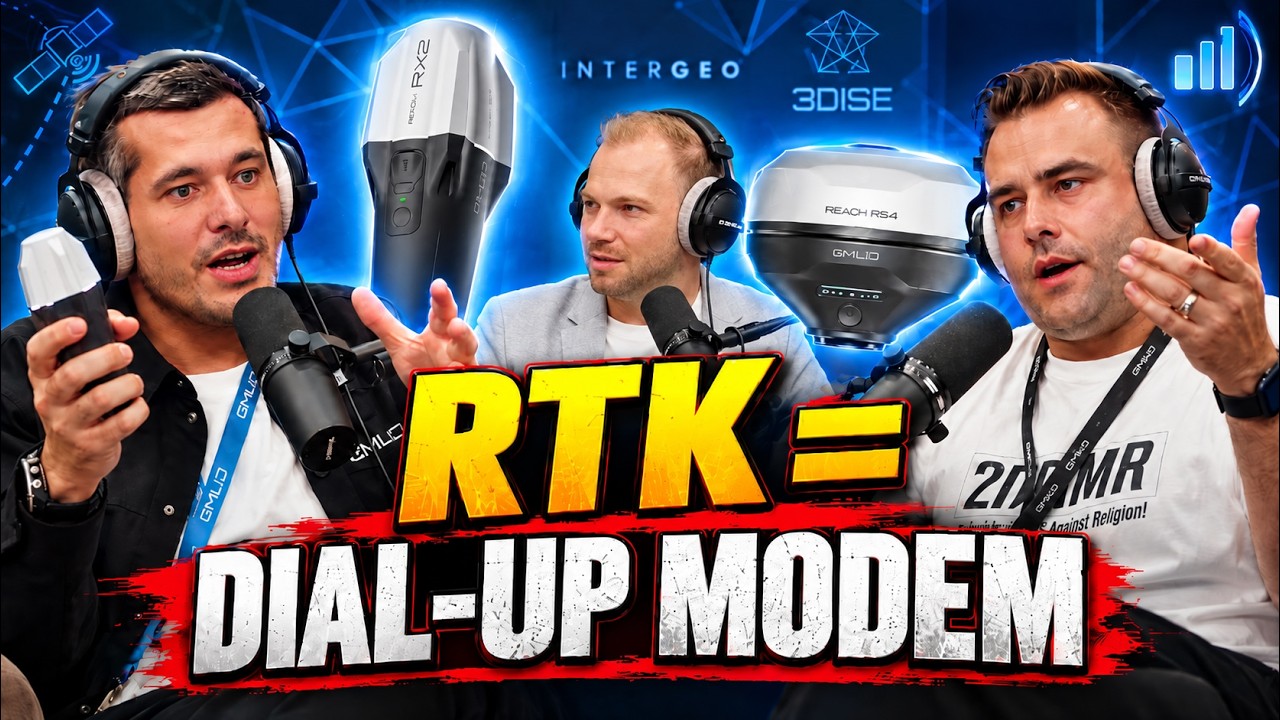 21 min
Expo & conference podcast
RTK in 2026 still feels like a dial-up modem – Igor Vereninov, Emlid
Igor Vereninov · Emlid
 16 min
Expo & conference podcast
AI in land surveying: what to automate and what to defend in court – Rami Tamimi
Rami Tamimi · 3DISE Conference
 31 min
Expo & conference podcast
Trimble Connect: point clouds, 360 images and AI search in one place – Gregor Willhauck, Trimble
Gregor Willhauck · Trimble